How does blending integrate your brand identity into the lives of your customers?
Brand identity and blending go hand in hand today. Blending is the art of allowing your brand identity to subtly merge into the lives of customers. It's no longer about logos that stand out, but about brands and identities that fit together. The four pillars of blending within a brand identity are transparency, framing, personalisation and boundary blurring. Brands that master this don't only create recognition; they also create connection.
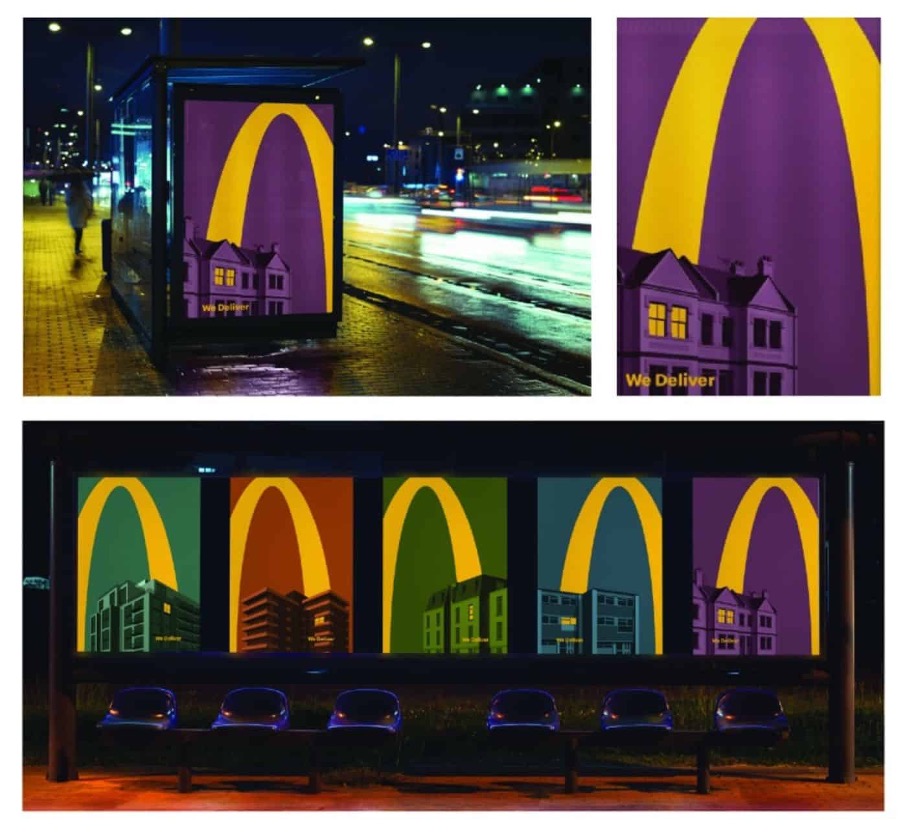
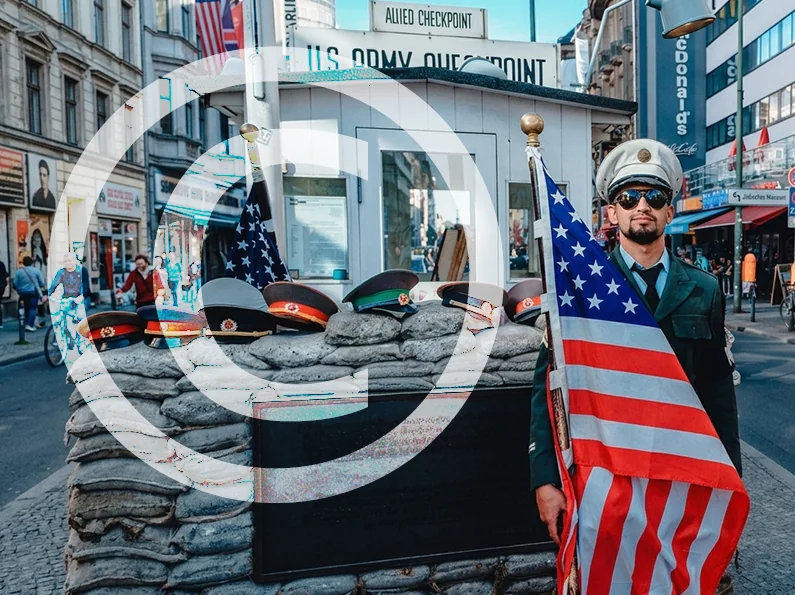
McDonald's merges the logo around the holidays into your home.
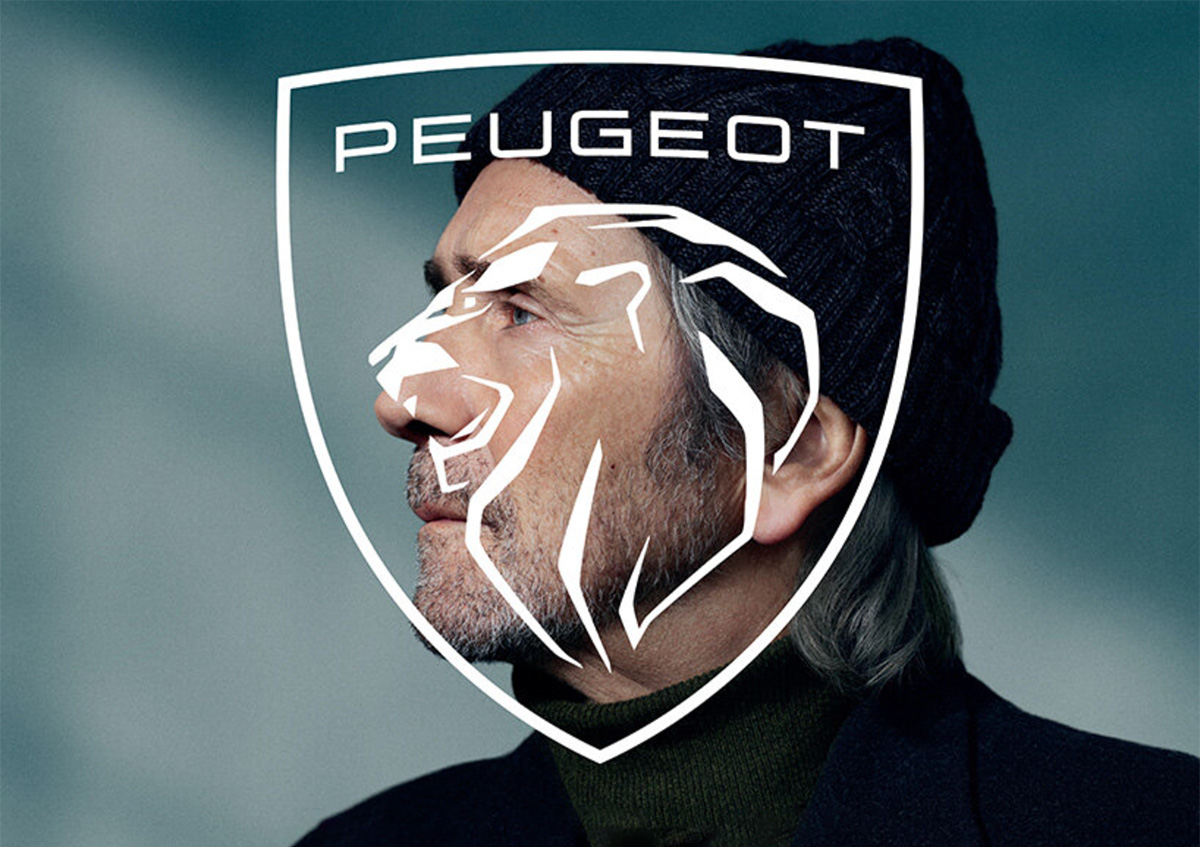
What do you notice in the streetscape? Everywhere you see the same trend. McDonald's allows the golden arches from its brand identity to merge into the lights of living rooms. Peugeot places its lion's head over faces. Nike, Coca-Cola, Heinz, BMW, all the major brands choose the same strategy. They don't just rebrand. They choose to integrate instead of standing out.
This is called brand identity blending. And it changes everything you thought you knew about brand identity.
Why brands are choosing blending en masse
In a blog from Fitbrand in 2021, Pascal wrote a post for Fitbrand about the same trend, but it was still new then. Brands were undergoing mass rebranding at the time. They moved from complex, detailed logos to minimalist, flat designs.
Everyone said: 'Digital-first. That's the future.'
Four years later, in 2025, I understand what it's really about. Digital-first was merely the means. The goal was far more ingenious.
Brands no longer want to dominate. They want to integrate with the target audience. So they want to become part of their customers' world.
Not on top of it. Not beside it. But within it. This is blending.
What is brand integration (blending) actually?
Blending literally means 'mixing'. In brand communication it's something powerful: the gradual dissolving of boundaries between brand and customer.
A traditional logo stands on its own. It must be seen. It must make an impression. It must shout: 'Hey! Look at me!'
A blended brand? It doesn't say: 'Look at me'. It says: 'I'm already part of your world. I belong here.'
Brand identity and blending: the four pillars
1. transparency + 2. framing + 3. personalisation + 4. boundary blurring
These are the four pillars. And every brand worth mentioning masters at least two of them. Let's unpack them.
How does transparency work in your brand identity?
Peugeot. Rebranding for the first time in 46 years. What stood out? The lion's head is no longer attached to the body. That head stands alone. And Peugeot allows it to go transparently over customers' faces.
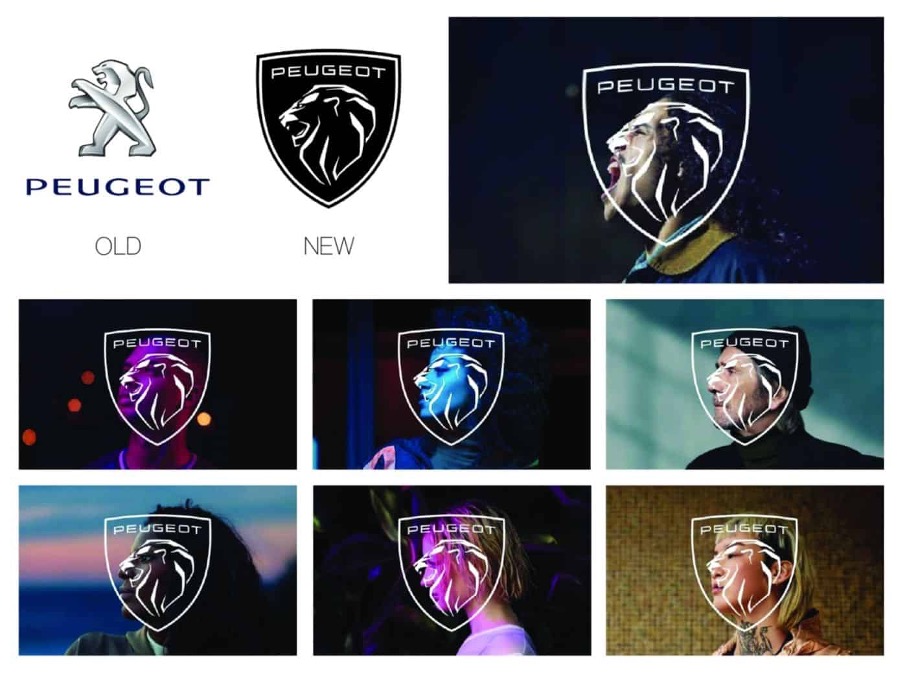
Peugeot's new logo has switched from a 3D style to a simple vector drawing style version.
Why this brilliant move? The transparency ensures that the brand becomes one with what lies beneath it. So the lion doesn't become the symbol of Peugeot. The lion becomes the lion in you.
BMW and Nissan do the same thing. Their brand marks disappear into the backgrounds in which they're placed. Each time a different story. Each time a different feeling. Always the same brand.
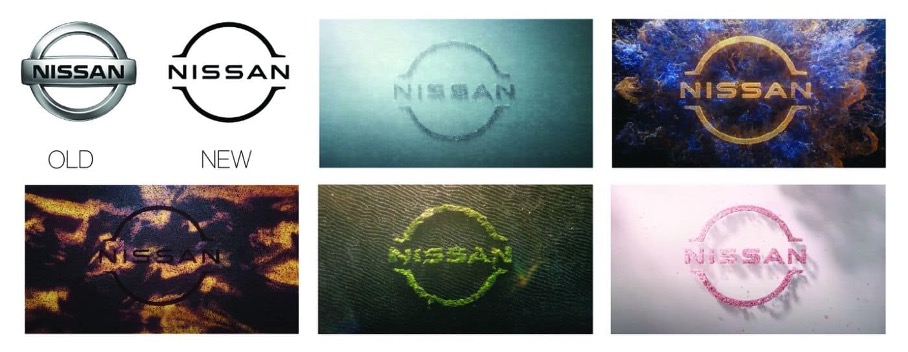
Nissan can now also much more easily ensure that the new logo can integrate different atmospheres into a visual style.
This is transparency. Not only in nature, but also in design.
What does framing mean for your brand experience?
Framing is something different. Placing a frame to draw attention. A window through which you look at something special.
Volkswagen makes good use of this. The renewed, minimalist logo is used within a frame. That frame emphasises. That frame says: 'Look here. This is important.'
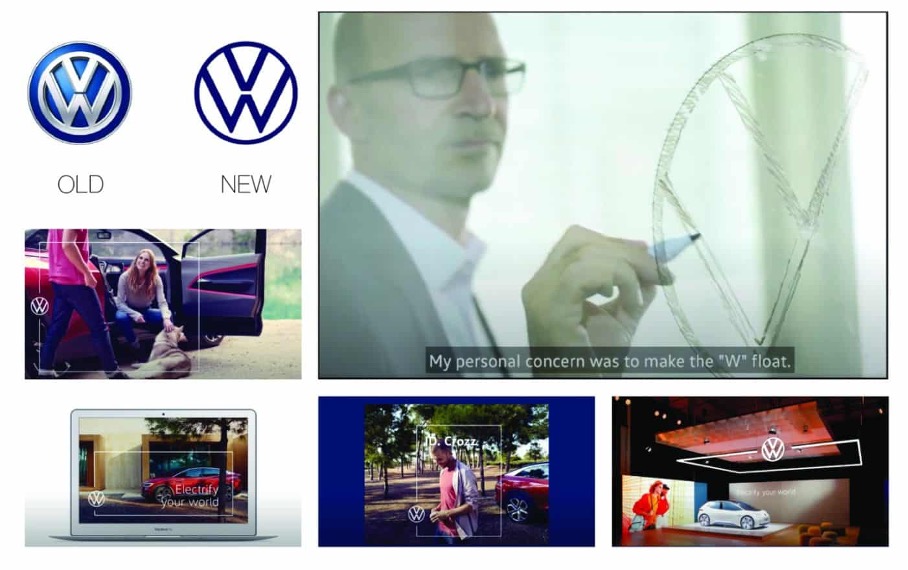
Volkswagen's new logo can now 'float' over the subject.
But look at Heinz. Heinz has one of the most recognisable brand elements in the world: that red colour and a distinctive shape. In their new strategy they place this element as a frame around ingredients. Beans. Ketchup. Mayonnaise.
Your brain immediately makes the connection. You no longer see Heinz's brand identity only as a logo. You see it as proof. And when you're in the supermarket? That proof determines your choice.
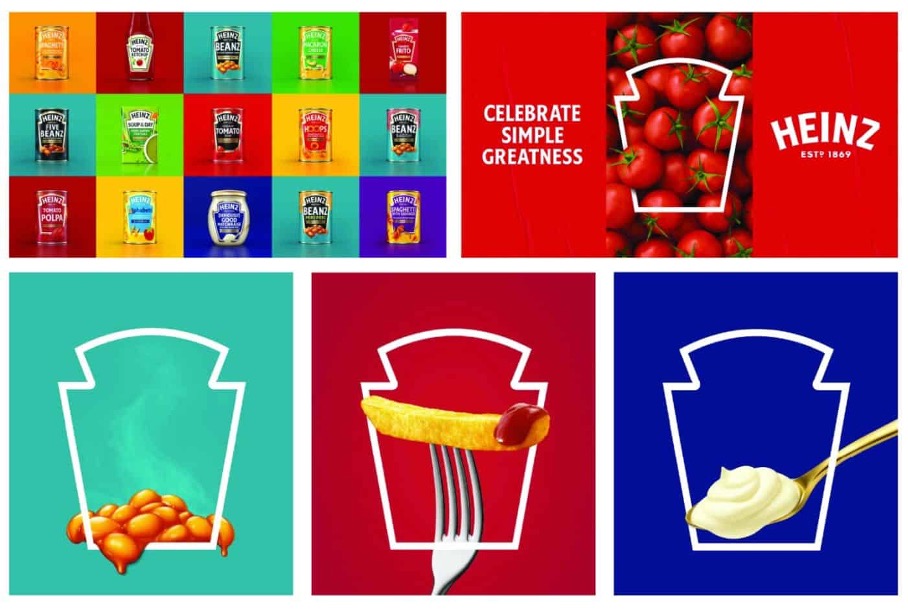
Heinz uses framing. Sometimes even without the logo.
This is framing. The art of using your own brand identity to show what matters.
How does personalisation increase your brand loyalty?
Coca-Cola did it earlier than everyone. Personalisation campaigns. Your name on bottles. So simple. So brilliant.
In that moment it no longer feels like a Coca-Cola bottle. It feels like my Coca-Cola bottle. That separation makes all the difference. You've just dissolved the boundary between brand and customer.
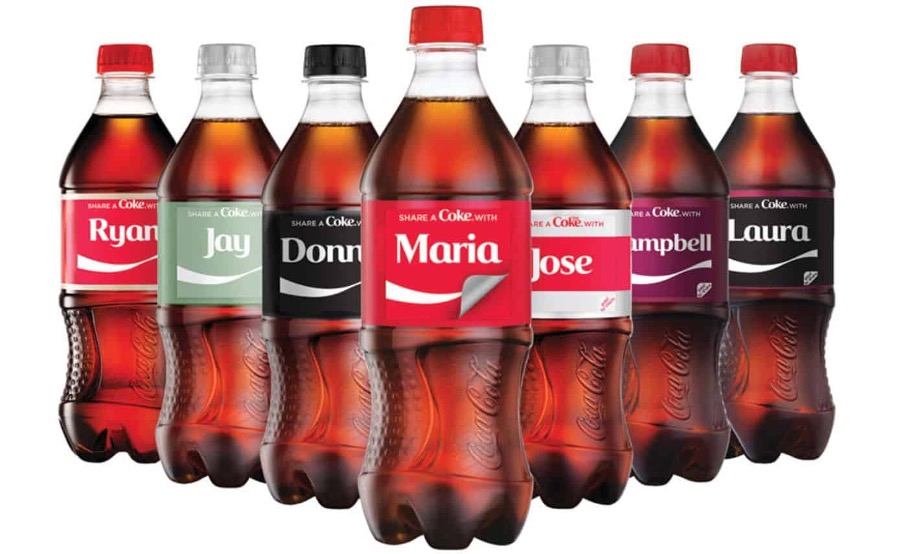
Coca Cola goes furthest with personalisation. Your first name on a Coca Cola bottle has grown into a new marketing cult.
Nike understands this. You can order personalised trainers. Your colours. Your initials. Your size. Suddenly they're not Nikes you happen to be wearing. They're your Nikes. You build a bond with them. Years later still.
Personalisation is the most underestimated pillar of blending. Not everything needs to be personalised on a large scale. Often a small detail suffices. The name. Your colour. Your story.
How do you blur boundaries between commercial and personal?
'Say Nespresso, say George Clooney.' This model worked for several years. Celebrities as ambassadors. Major impact. But for real integration into customer life? For that we're already in a new era.
Influencers. Non-brand ambassadors. The difference is enormous. An ambassador says: 'This brand pays me to promote this product.' An influencer says: 'I really like this.' Or rather: influencers say nothing. They use the product in their daily lives. And you can't even tell whether it's an advert or just a moment from their day.
That is boundary blurring. When commercial and private are no longer clearly separated.
This works because many brands can no longer give an assignment. They integrate. They simply belong.
What has changed about brand identities in the meantime?
We now also recognise brand identities through blending. But there are three major shifts.
Why AI power and brand identity go together
AI reads blending differently. Search engines, voice assistants, AI overviews expect integration. They expect that your brand doesn't bump into something, but that it adapts. Responsive. Personal. Relevant for that moment, that person, that context.
Brands that succeed in 2025 have combined AI power with human authenticity. It's not AI or human. It's AI and human.
Why authentic brand values are no longer optional
Transparency. Personalisation. Boundary blurring. This only feels authentic if your brand truly believes in it. Customers sense that immediately.
In 2021 you might have been able to imitate blending. Not anymore. Purpose-driven branding has become the norm. Customers see correction. They feel what is real.
Brands that score in 2025 don't just have blending in their design. They have it in their DNA.
How microsegmentation strengthens blending
Big data became unfashionable. Microdata became fashionable. Brands no longer segment at the millions level. They segment in groups of hundreds or a thousand people. Niche communities. Micro-influencers with a thousand followers versus millions of followers.
@emmahalbrook
Here's your Brandon Sanderson Cosmere reading order 💫📖⚔️🚀 #booktoker #readingorder #cosmere #brandonsanderson #stormlightarchive #mistborn #fantasy #fantasybooks #books #reading #readersoftiktok
♬ original sound – Emma Halbrook
Many brands nowadays make use of micro influencers on TikTok or on Instagram.
This makes blending more powerful. Not 'one message for everyone'. But 'a thousand variations, each perfect for that group'.
How do you apply brand identity and blending in your brand?
This isn't something for multinationals. This is for you.
As an entrepreneur you have something that McDonald's, Peugeot and Coca-Cola don't have: your personality. That is your greatest blending tool. Not your logo. Your story. Your voice. Your choices.
Ask yourself the following questions
→ Can I make my brand more transparent? What boundaries can I remove between me and my customers?
→ How can I 'frame' my brand data? What do I want customers to see and understand?
→ How can I build in personalisation? Which detail do I make of the customer?
→ Where do my boundaries between commercial and authentic blur? Where can that be even better?
Brand identity is no longer: what we look like. It is: who we really are.
No one's interested in your logo. Your brand integrates into customers' lives, or it doesn't.
Blending isn't a trend. Blending is the standard. Today, tomorrow and beyond.
The question is no longer: 'Does my brand look the part?' The question is: 'Does my brand belong?'
In short
Brand identity and blending aren't trends — it's the new standard for brands that want to last. Subtly, consistently and personally present in your customer's life. View my approach to see how I shape this together with you.
Want to rebuild your brand identity?
My team and I know what's truly valuable. Not trends that will be over next month. Not eye-catching logos that differ in nothing from others.
We help entrepreneurs build their brand so that it integrates. So that customers see it, hear it and remember it.
This doesn't just happen. This requires strategy. Creativity. Brainpower.
This is exactly what I do.
View my brand strategy approach here. There you'll find explained how I can help you. And where I can directly show and let you feel what you need.