Work that rolls out of an AI without human input carries no copyright. Sell that to a client and transfer the rights, and you're transferring nothing. Since 2 August 2026, Article 50 of the EU AI Regulation has been in force, and Anthropic is marking the text from its latest Claude models with an invisible watermark. If you write it yourself, edit it and put your name to it, you're in the clear. But what about "human"-generated content, actually?
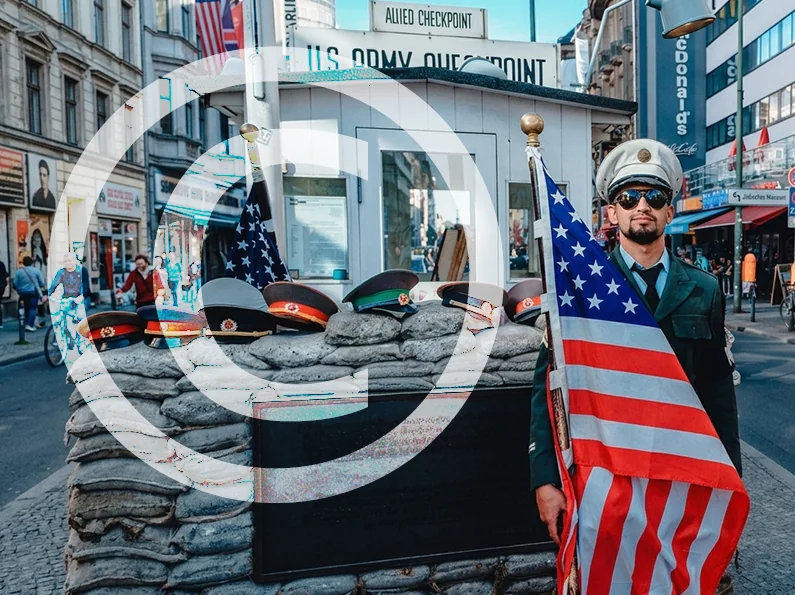
I made this photograph at Checkpoint Charlie (Berlin) in 2018 on commission.
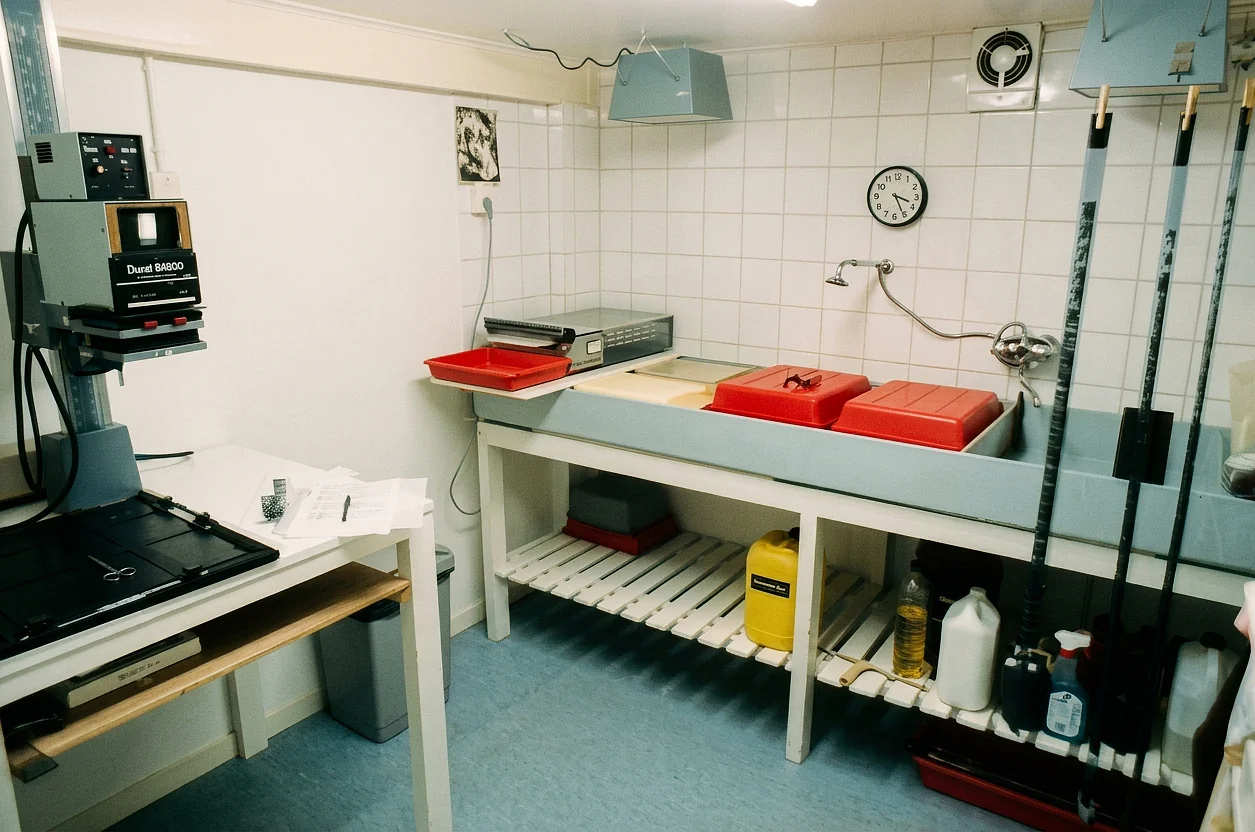
Amsterdam, the nineties. On the back of every print I make in the darkroom I stick a label. My full name, my address and the copyright symbol. No one questions whether that's legitimate, because I took the photograph and therefore the photograph is mine. Over thirty years later, it's precisely that certainty that's disappeared, and the problem has been given a name: copyright of AI content.
My home-built darkroom in Amsterdam in the nineties
Since 2023 it's been no man's land, thanks to the rapid rise of AI. A land grab, without any shame. Anything goes, everything's allowed, and the idea creeps in unnoticed that nothing belongs to anyone anymore. That's handy, because then you can simply call yourself the owner of the image.
That's now changed. Since 2 August 2026, Article 50 of the European AI Regulation, the AI Act, has been in force. That's the transparency article. A chatbot must say it's a chatbot. A deepfake must be marked as artificial. And anyone offering generative AI must mark their output in machine-readable form. It applies to everyone, so not just to a tech giant like Google, but to your one-person business as well. And it just so happens that Anthropic (the makers of Claude) also started watermarking on 2 August. That can't be a coincidence.
What rolls entirely out of an AI model belongs to no one. That sounds very liberating. Until you try to sell it.
What exactly is the AI Act?
Since 2 August 2026, Article 50 of the AI Act has applied across the whole of Europe: anyone publishing a deepfake or an informative AI text must declare it, and AI companies must mark their output. Anthropic has been doing that since the same day with an invisible watermark in the text of its newest models, with older models to follow later. Work that rolls out of a model without human input carries no copyright, so anyone selling it transfers nothing. Those who write and edit themselves are fine.
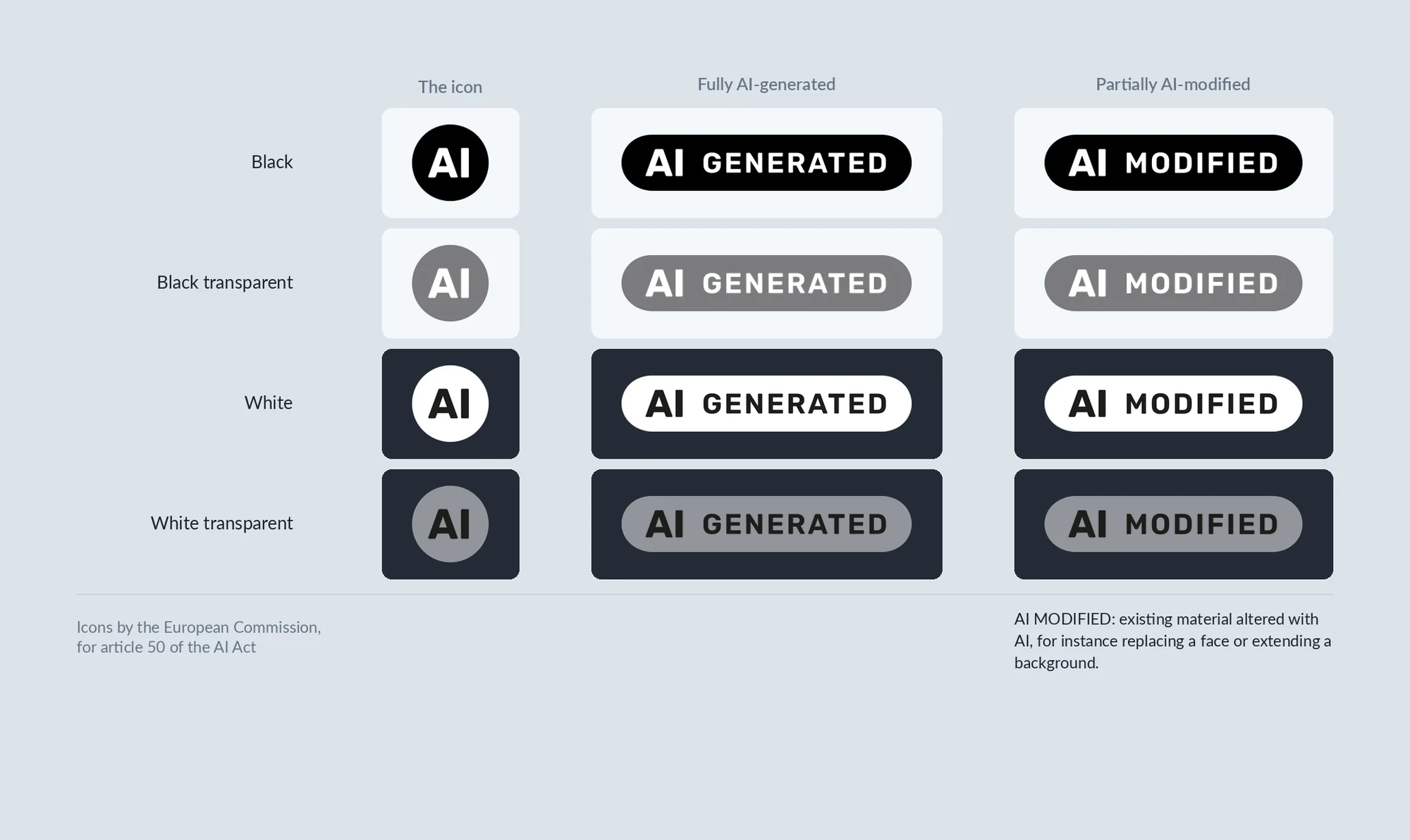
The set of mandatory labels for every image in Europe.
Copyright of AI content: why that sticker would now make no sense at all
Copyright isn't a formality you arrange, it's a consequence. It arises when a human being makes something in which their own choices are visible. The intellectual property in this lies with the person who made it. That's enshrined in law. An AI machine makes no choices, it calculates an outcome, and therefore that outcome yields nothing to protect.
The US Copyright Office has left little room for doubt since January 2025. In the article Copyright and Artificial Intelligence, Part 2: Copyrightability the office states that human authorship is the foundation of copyright, and that simply choosing prompts yields no protected work, however detailed those prompts may be and however much effort they've cost. Europe reasons along the same lines, so for copyright of AI content it makes little difference which side of the ocean you're on.
And with that, the freedom of movement of the cowboys is being curtailed. It's a more welcome rule than it looks at first glance. It doesn't say you must stay away from the AI machine. It does say that protection travels with whoever's operating the machine.
What does the AI Act require of you as a business owner?
Two things at once, and together they determine what copyright of AI content looks like from now on.
The AI Regulation, better known as the AI Act, is a European law, in full Regulation (EU) 2024/1689. 2024 refers to the year in which the law was adopted, and it came into force on 1 August 2024. Article 50 is the newest component and concerns transparency. This component has applied since 2 August 2026. So the law is two years old, this obligation is brand new.
What Article 50 requires is simple to summarise. Chatbots must identify themselves, deepfakes must be marked as artificial, and providers of generative AI must mark their output.
Image by Anthropic. The 5 of Fable 5 depicted in stones.
On that same day, Anthropic began doing precisely the latter. In How Claude marks AI-generated content the company explains that it weaves an invisible watermark into the text that Claude produces. Not in the formatting, but in the word choice itself. It travels with you when you copy and paste, it applies worldwide and across all products, and you can't switch it off. For now this only applies to models released on or after 2 August 2026; for the older ones there's still a transitional period. Anthropic itself adds that the mark disappears with heavy editing, paraphrasing or translation, and that a short text gives too little material for a reliable signal.
A detector that you can use yourself doesn't exist yet. Anthropic says it's working on one, but gives no date. At this moment only the company itself can read the mark. As soon as that changes, the type of evidence changes too.
The AI detectors that schools and publishers now use do nothing more than guess based on the text, and they're regularly wrong. A mark from the maker itself isn't a guess. Not watertight, because it disappears with heavy rewriting, but of a different order to what's there now.
And then the detail almost no one's talking about. An AI watermark like that proves processing, but not authorship. If you have Claude correct your own text, the outcome carries the same watermark as text the machine writes from scratch. That leads to unfair accusations and makes copyright of AI content something you have to explain yourself.
Can you sell what belongs to no one?
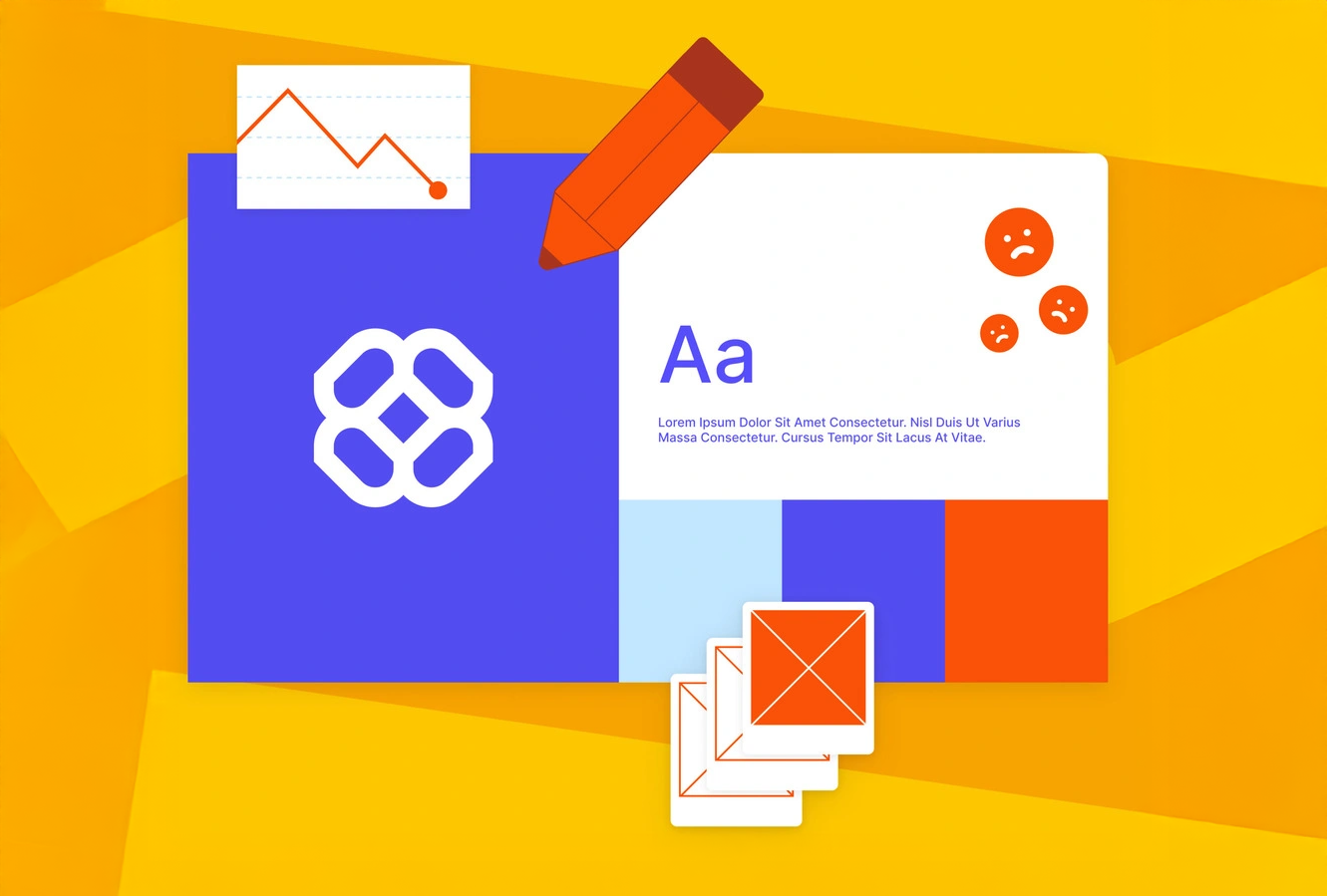
Say you have a logo made. A nice design comes out, you pay the invoice, and the terms state that all rights are transferred to you. Neatly arranged, you'd think. If that logo comes from an AI generator, then nothing's been transferred. There's nothing to transfer. If a competitor sees the logo next year and takes it over, you can't claim anything. You've paid for something that belongs to no one.
We draw the logo design for Rapide Software in Adobe Illustrator.
I draw logos myself, in Illustrator, so this doesn't affect me. But the designer who does work that way has something worse than a fine round their neck: a promise in their own terms with nothing behind it. For anyone working on a brand's visual identity, that's the most concrete consequence of the entire discussion about copyright of AI content.
The way out isn't complicated. It's just not free. The moment you substantially direct, iterate and make your own choices in selection and composition, you're protected. Then the machine is a tool, just as a camera or Illustrator is. Where exactly that line lies in copyright law for AI content hasn't yet crystallised in case law in 2026, so keep your tracks: prompts, intermediate versions, your interventions. In a dispute you need to be able to show how it came about.
But now the lenient side of the AI Act
Article 50 contains an exception that rewards precisely what professionals do anyway. If you publish AI texts to inform the public, you must disclose that. That obligation falls away the moment the text has undergone human editorial review and someone takes responsibility for the publication. The threshold for that is a conscious substantive assessment by someone with expertise. A spell check explicitly doesn't count.
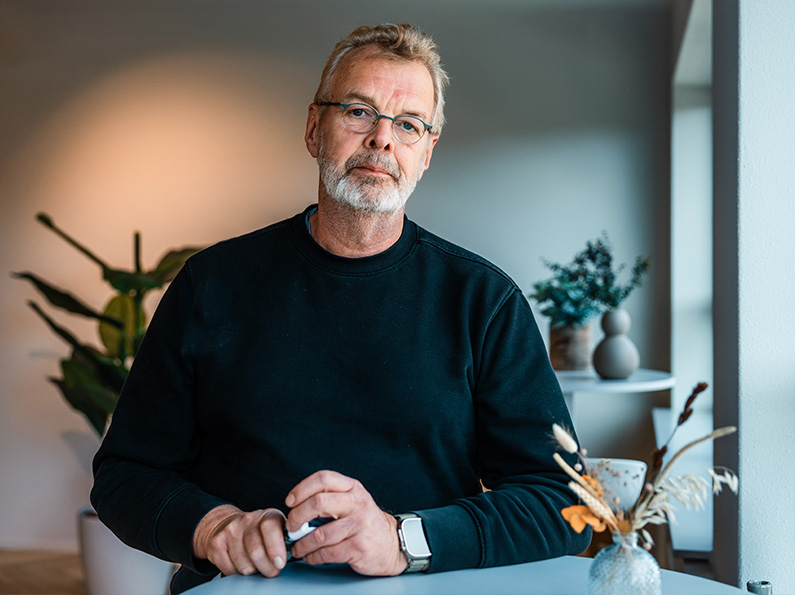
Final editorial control when working with AI still rests with me.
Put simply, a fully automated news feed must carry an AI label. A blog that you rewrite and publish under your own name doesn't. The law puts a premium on craft, and that's precisely where in my way of working final editorial control always rests with a human. Anyone who works this way has little trouble with copyright on AI content, only advantages.
How do you manage copyright on AI content in your own business?
Five things you can start with yourself. You don't need a lawyer for these straight away.
1. Keep the trail
The moment you substantially direct, protection arises, but you need to be able to demonstrate that. Create a folder for each assignment and put in it:
your prompts, including the adjustments you make to them
three intermediate versions, from rough to finished
the source file containing your handiwork (.docx, .ppt, .psd, .indd)
Do this during the work, not afterwards. Reconstructing afterwards isn't a trail, that's a story.
2. Review your own terms and conditions
Almost every design agreement promises complete transfer of rights. For work that rolls out of a model without your interventions, you're promising something that doesn't exist.
search your terms and conditions and quotation template for 'transfer' and 'copyright'
add that you transfer to the extent that rights have arisen
record for logos and brand marks that the design was drawn by a human
3. Put a human on final edit, with a name
The exception in article 50 requires two things at once: a substantive assessment by someone with expertise, and someone who takes responsibility for the publication.
Agree who that is, even if you work alone.
A spell check doesn't count, a substantive intervention does.
Put that person's name on the article.
4. Label only what must be labelled
Not everything needs a label, and that helps.
fully automated feed or news item without human touch: disclose
text that you rewrite and put under your name: don't disclose
AI image that resembles real people, places or events: always mark as artificial
chatbot on your site: it must say that it's a chatbot
5. Put one sentence at the bottom of your site
Transparency is cheap and it saves you explaining afterwards. You can adopt this one:
"When writing the texts on this website I use AI as a tool. I edit everything myself and take full responsibility for what appears here."
Why Denmark is giving its citizens their faces back
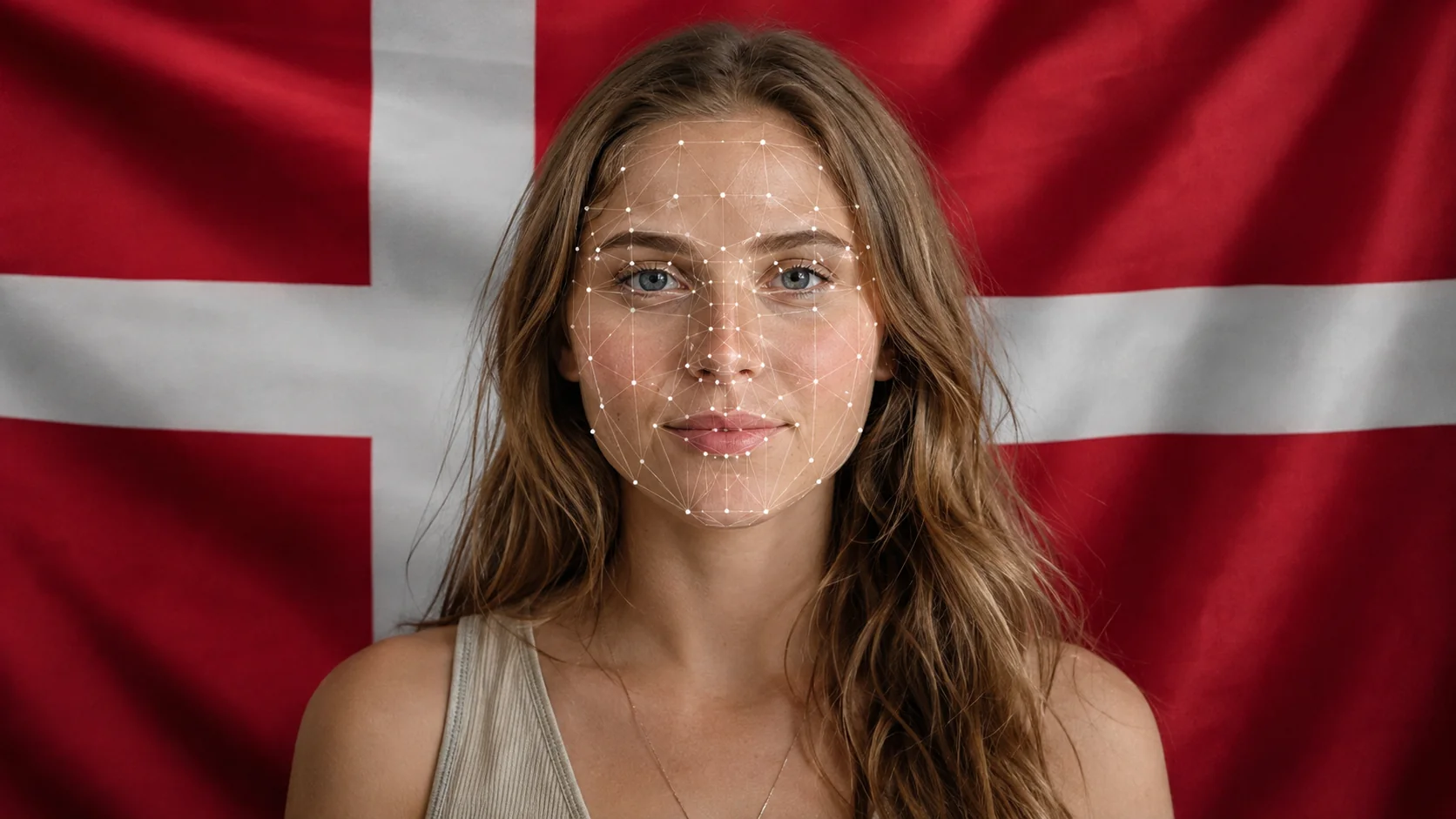
The finest move comes not from Brussels but from Copenhagen. Denmark is amending its copyright law so that every Dane gets a copyright in their own face and their own voice. Not just famous people, everyone, and you don't have to register anywhere. You can demand a takedown and claim compensation without proving that your reputation has suffered damage, and the platform is liable if it does nothing. The Research Service of the European Parliament describes this approach in The Danish approach to copyright and deepfakes. Entry date 31 March 2026, first country in the world. The European Commission does raise objections to the route Denmark is choosing, so whether the rest of Europe follows is still open.
The Danes are the first in the world to get copyright in their own face and voice.
Put the three side by side and the pattern leaps out. Europe enforces transparency, America hangs a price tag on it (Anthropic settled last year for one and a half billion dollars with authors whose books were plucked from illegal libraries), and Denmark gives people their own faces back. Copyright on AI content is thus no longer a niche for lawyers, but something that everyone who makes anything will have on their plate within a year.
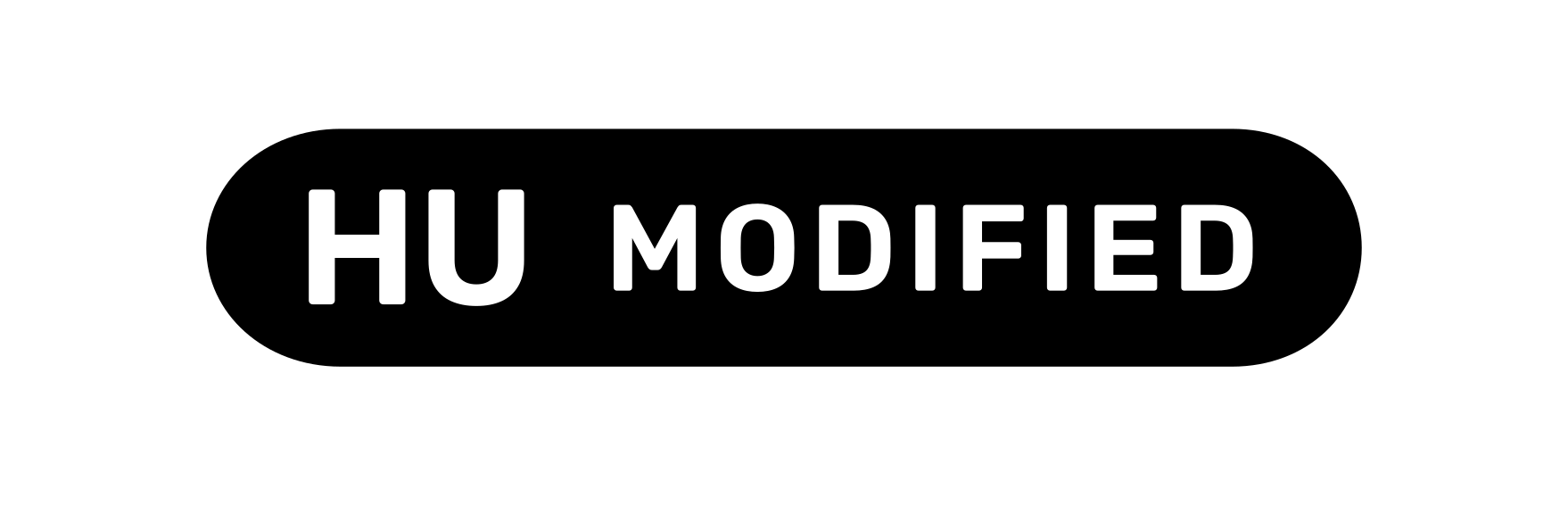
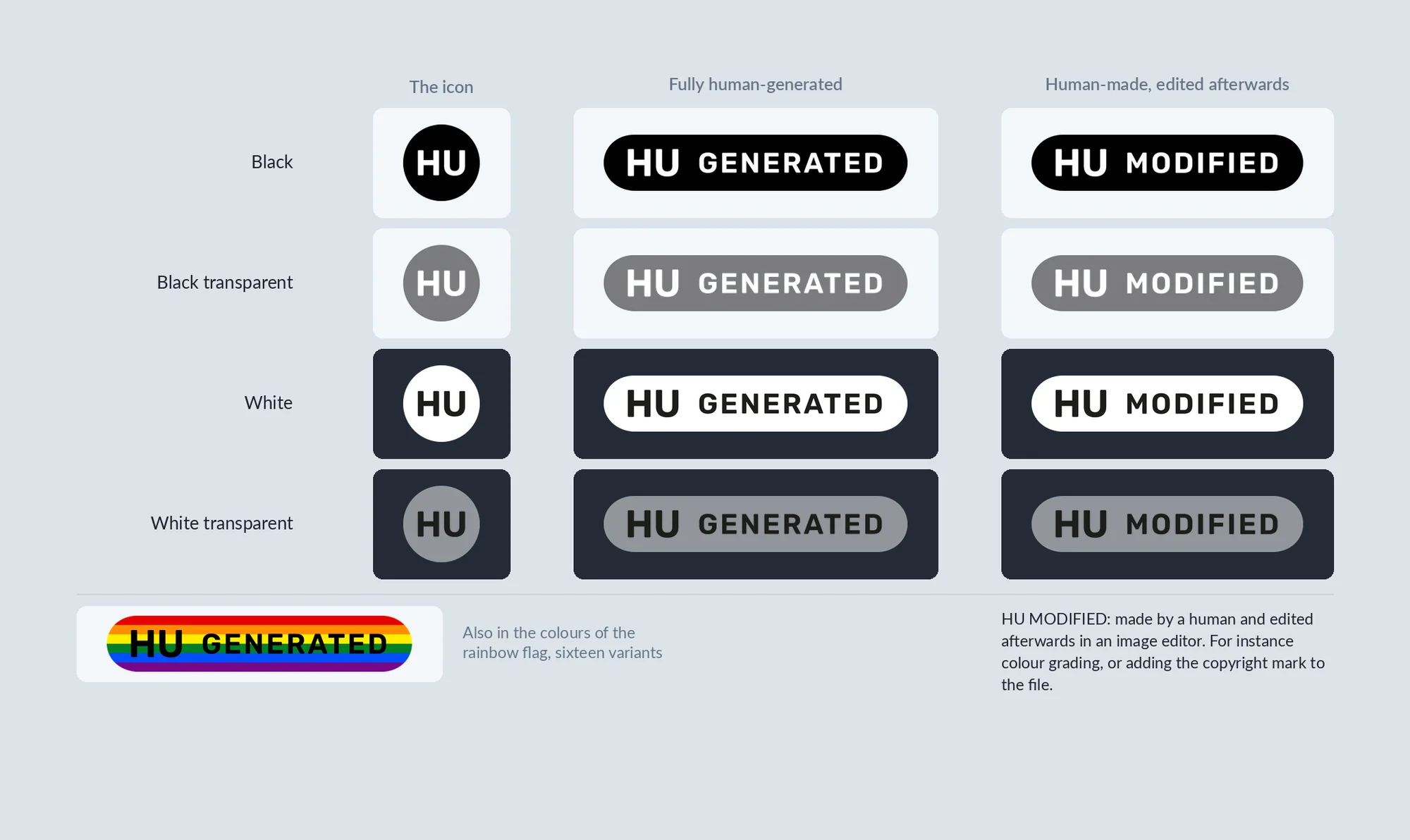
Meanwhile there does exist an official European icon for labelling AI content. AI GENERATED, AI MODIFIED, neatly designed and ready for use. For the reverse nothing is arranged. There is no label whatsoever that says a human made something. You might think a real photograph doesn't need a label. I think the opposite. The sticker that Europe wants to put on AI work, we might as well put on our own work ourselves.
Overview of the Human Generated labels
Which label says a human made this?
I've already made a set of stickers, just as I used to do with my photography work. A set of stickers called HUMAN GENERATED, but in the look and feel abbreviated to HU GENERATED (the alt text then becomes human generated). In the same form and at the same size as the European label, in black, in white and in colour. An SVG and PNG set that you can download and use for free wherever you want, on your photos, in your designs, on your site. There's also a rainbow version in the colours of the LGBTQ+ flag, because if a label says there's a human behind the work, you can also show which one.
Not a quality mark, not an institution, not a registration, and legally it solves nothing in the discussion about copyright on AI content. This part was still missing.
What's left of the sticker
That sticker in the darkroom was a legal instrument. It's not there to win a lawsuit and it doesn't say the photo is beautiful either. It says that human hands were involved. That someone took that photograph. That same idea has later taken a technical form. Cameras now sign their recordings cryptographically, with a standard set up by amongst others Adobe, the BBC and Microsoft. That same signature has been attached by Claude since August to the images it generates, so that side of the story runs along precisely the same line. The medium changes, the idea doesn't.
I hope you find this post useful and can get to work with it. Questions or comments? Send me a message. Share the blog with anyone else who's facing this too.
Peter van der Steege is a brand strategist, designer and AI director. He builds brands for entrepreneurs and writes about what makes brands strong, from strategy to the role of AI and humanity. He lives and works in Groningen.