15 November 2024. I'm lying on the ground in the Noorderplantsoen. I don't know that from my own memory, my heart took the decision for me and sent me for a few minutes to a place where no one can reach. A heart rhythm disorder, a fall from my bicycle, and a head that afterwards disagreed with me for quite some time. A week at UMCG. Then over two months at Beatrixoord.
The body recovered according to a schedule. Physiotherapy, a walking programme, a date when the doctor nodded with satisfaction. Writing had no schedule. I had to work that out for myself, with a hand that no longer did what I asked.
A signature I no longer recognised
I'm left-handed. Precisely the side that refused to cooperate after the fall. The first time I held a pen, what came out was a signature that looked more like abstract art than the scrawl I'd used for forty years. Uncertain lines, motor skills I had to learn to trust again.
What exactly had been affected, I only understood later. Not the pleasure of making something, that remained intact. But the question of why I was making something. With writing those two normally coincide: your hand forms the letter, your head determines why that letter is there. After the fall I had to reconquer them separately. First the hand. The question of why came back naturally as soon as the hand could manage it again.
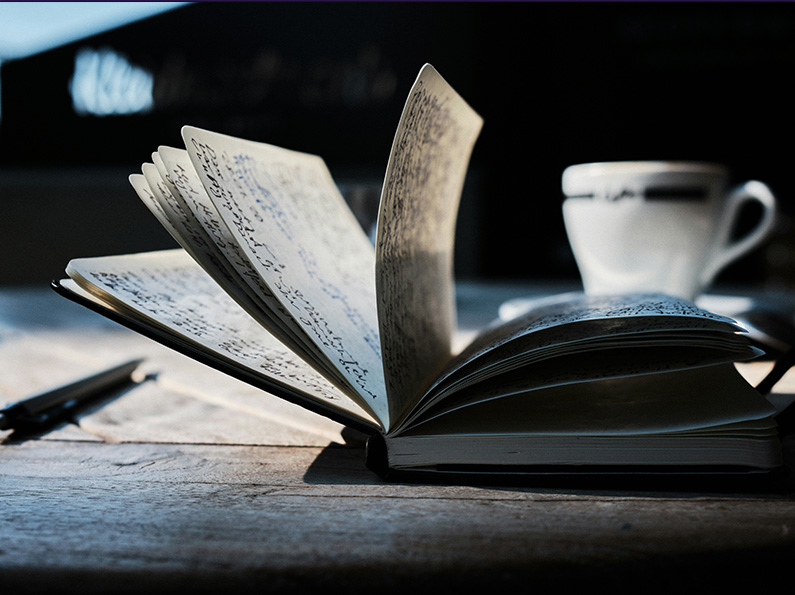
I began keeping a daily journal, not because a therapist told me to, but because it was the only place where I could write myself back together. The sentence didn't matter. The hand that had made it mattered.
A signature is the only piece of text that serves no purpose other than to prove it was you. No message, no argument, no reader. Just a hand that says: here I am. I hadn't realised that for forty years, until I had to learn it again.
Text everywhere, a hand nowhere
Whilst I was working on a sentence with my left hand, a language model could deliver a thousand before I'd put the full stop. No hesitation, no crossed-out attempt, no draft version that still bothers you at night. Just output, and pretty good output too.
The figures confirm what everyone already felt. Research agency Graphite analysed 65,000 English-language articles, published between 2020 and May 2025, and discovered that the proportion of AI-written content has since risen from approximately 10 to 52 per cent. For the first time the machine writes more than humans.
You could say: a text is a text, it's about the thought, not about who moved the fingers. That's true for a shopping list. But I've just spent two months relearning something that every child allowed to type never has to do again: let a thought physically pass through a body onto paper. That cost something. And what costs something changes what it's worth.
What the machine cannot take over
I work with AI myself daily. I'm not an opponent of the tool, I use it all day long to think, to structure, to edit. But a language model cannot have experienced a November day in the Noorderplantsoen for me. It cannot have relearnt a signature for me. It can only sound as if it did, and that's where the deception begins.
Words that come from somewhere have become rarer. Not because less is being written, more is being written than ever. But supply has become infinite, and origin hasn't. A text without a scar isn't necessarily bad. It's just replaceable, and that's something different.
AI amplifies what's already there. A sharp voice sounds sharper through it, an empty story just sounds empty faster through it. That applies to the brands I guide, and this time it also turned out to apply to myself: the tool could only do something for me after I myself knew again how a sentence from my own hand felt.
Two hands
I now write with two hands. The right for daily work, faster than the left will ever be. The left for the days when I want to write down something that may only be mine: a journal, a birthday card, a signature under a contract that matters.
Both hands are mine. That's the only thing an algorithm can never claim, however good the sentence turns out.
An ode to the pen, then.