Essay
The brain is not a computer
The brain is not a computer. What neurobiology teaches us about AI, humanity and why a strong brand can never be taken over.
Peter van der Steege
May 28, 2026 · 7 min read
Essay
The brain is not a computer. What neurobiology teaches us about AI, humanity and why a strong brand can never be taken over.
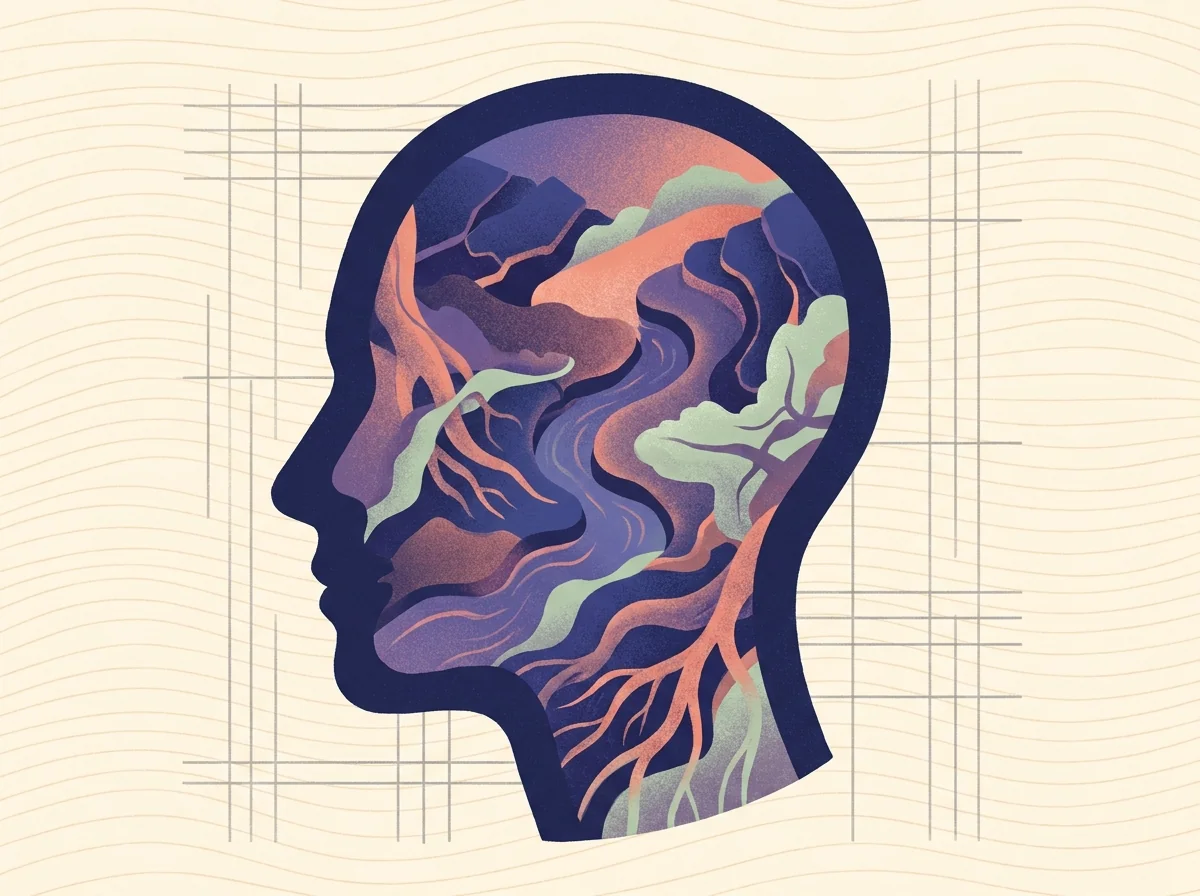
There are moments when an idea feels like something you always knew, but couldn't yet articulate. I had one last week, when I read a book review in Nature. The neuroscientist Romain Brette has written a book that I can scarcely summarise without doing it a disservice: The Brain, In Theory (Princeton University Press, 2026). But the essence can be articulated.
The brain is not a computer.
Not 'not in certain ways' or 'not in a philosophical sense'. Brette's thesis is fundamental: the brain is not programmable, neural activity is not code, and the brain does not process information in the sense that engineers and computer scientists give to that word. For three decades, neuroscience has treated a metaphor as a fact. Brette calls this 'epistemic phlogiston', after the fictitious element once invented to explain fire. The word seemed to answer the question, whilst it only reformulated the question. Convenient. Wrong.
Because we live at a moment when everyone is forming an opinion about what AI can and cannot do. Some fear it will make us redundant. Others believe it will solve our problems. Both proceed from the same silent assumption: that the human brain is a computer, just a biological one. If that assumption is correct, it's only a matter of time before machines do it better than we do. More computing power, fewer errors, no sleep deprivation.
If that assumption is incorrect, the entire equation changes.
Brette uses an example I can't shake. Suppose you're in a room and you see a chair. What do you do? You don't classify the chair as an object in the category 'furniture, subtype seating'. You already feel your own body sitting. You anticipate the movement, the backrest, the weight on your spine. You know what the chair means for you in the most literal, bodily sense. Not because you calculate it. But because you have a body, in a world full of chairs.
An AI sees pixels. Compares them with millions of other pictures of chairs. Classifies correctly. Reproduction: 99.9%.
But it never sits.
That is the core of what Brette says. Cognition is not computation; it is knowing through doing. He introduces anticipation as the core concept of cognition and life: our brain doesn't calculate what is, it prepares the body for what is to come. The chair you see already evokes the movement you will make. That is not information processing. That is something fundamentally different.
Our brain, moreover, does not consist of fixed rules or commands. It is, in his own words, 'the collective behaviour of a colony of living entities': not a distributed computer, but a self-organising system inextricably connected to a body that lives, moves and perishes. Neurones react to context, to history, to the state of the system as a whole.
The engineer trying to understand a brain, Brette says, is like someone trying to understand love by studying the accounts. The numbers add up. The point missed.
On 15 November 2024 I fell off my e-bike in the Noorderplantsoen in Groningen. My heart raced, 260 beats per minute, and I was gone for a moment. The diagnosis after admission to the UMCG: subarachnoid haemorrhage, skull base fracture, blood in the lateral ventricle. Acquired brain injury.
What followed teaches you more about how the brain works than most books ever will.
A computer that becomes damaged becomes proportionally damaged. Less RAM means less capacity everywhere. But my brain did something different. The cognitive screening showed that my information processing was slower, my divided attention impaired and my error monitoring fleeting. But my prefrontal cortex, planning, abstract thinking, reflection, functioned undiminished. Two separate systems. Two separate functions. The damage was in the limbic system: I could think clearly, but motivation felt sluggish.
What I later learnt to distinguish: the damage affected the meaning layer, not the making layer. Why am I doing this? That was the question that gave no answer. But just making something nice, that simply worked. Two separate circuits. That doesn't exist in a computer.
And the strangest thing was the recovery. That wasn't a repair as you'd replace a broken module. It was living. Movement as medicine. Morning light as anchor. One thing at a time, not because I wanted to, but because the system demanded it. The method was called Stop-Think-Do: pause before each action, think, then execute. Sounds simple. It isn't, when you're used to doing everything quickly.
That word, quickly, has since disappeared from my vocabulary. I no longer do something quickly. That sounds like loss. It feels like gain. Fast thinking has diminished. I never give an answer just like that anymore. I work much more precisely. The brain reorganised itself not by being repaired, but by living differently, in relation to a body that kept moving, a day that kept beginning, a world that kept offering.
Exactly what Brette describes: a living system, not a programmable machine. I had this proof in my own skull. I only saw it properly when I read this article in Nature.
This is not to say that AI is not powerful. On the contrary. AI is astoundingly good at what computers do by nature: recognising patterns, generating text, writing code, producing images. I use it every day. It makes my work faster, sharper, further.
But the fear that AI will 'take us over'? That rests on the idea that what makes us human ultimately comes down to the capacity for computation. If Brette is right, that's misplaced. What distinguishes us is not that we associate faster or reason better. It is that we have a body. A history. A specific chair in a specific room, at a specific moment, with everything we bring to that moment.
A brand is no different. A strong brand is not an algorithm, not a positioning document, not a consistent house style. It is the sediment of decisions a person made based on what he valued, feared, learnt and survived. It resides in the voice with which an entrepreneur speaks about his customers. In what he refuses to do when pressure increases. In the choices he made before he knew they were choices. All those things together form something that cannot be replicated, not because it's too complex, but because it was never engineered. It grew, as brains grow, in relation to a world it bodily inhabited.
Here comes the sharpest objection to everything I've written so far, and I don't want to sweep it away. Suppose Brette is completely right. Suppose the brain truly is not a computer. It still doesn't follow that AI can't take over your work. An aeroplane doesn't fly like a bird either. It has no feathers, it doesn't flap, it doesn't know what wind is. And yet it has taken over the journey. A machine doesn't have to be a brain to do what a brain did.
That objection is correct. And precisely for that reason it shows where the real boundary lies.
There is a difference between taking over a task and being what someone is. The aeroplane took over travelling, bridging a distance from A to B. That was a task. Nobody afterwards confuses the aeroplane with the bird, and nobody ever asked the aeroplane to brood, to sing or to build a nest. AI takes over tasks, more and faster than I thought possible two years ago. Text, code, image, analysis: they are tasks, and machines do them.
But a brand is not a task. A voice is not a task. The choice to let a customer go when pressure increases is not a task. Those are things that grew from a body with a history, and you cannot detach them from that without them ceasing to be what they were. The aeroplane took over flying and left the bird alone. AI takes over computing and leaves behind what was never computational work.
That is not replaceable. Not because the technology can't do it yet. But because technology was never the right sort of thing to take it over.
I have written more about AI over the past two years than about virtually any other subject. My central conviction was always the same: AI is the biggest development of this moment, and it does not make people redundant. I could substantiate that well from brand, communication, strategy. But somewhere there always hung a feeling that I was saying more than I could prove.
Now a neuroscientist from Princeton has given me the foundation. Not to prove me right, but to sharpen the distinction. The brain is not a machine you can optimise or replicate. It is a living system that organises itself in relation to a world it bodily inhabits. And what grows from that, a brand, a voice, a way of seeing, is not a task waiting to be taken over.
AI can do a lot. But it lives nowhere.
Based on: Àlex Gómez-Marín, 'How to breathe life back into brain theory', Nature (May 2026). Discussion of: Romain Brette, The Brain, In Theory, Princeton University Press, 2026.
Written by
Peter van der SteegePeter van der Steege is a brand strategist, designer and AI director. He builds brands for entrepreneurs and writes about what makes brands strong, from strategy to the role of AI and humanity. He lives and works in Groningen.