Running a business with AI has a meter that's always running. Every question, every text and every bit of code ticks through in tokens. What that meter doesn't count is where my best ideas come from.
Running a business with AI: what does the meter actually count?
I had it calculated once. In June 2026 I used 564 million tokens in Claude Code. By September it was 5.76 billion, spread across 21,826 tasks. Ten times as much in three months. A token is a snippet of text, and every snippet goes on the meter.
What do I get in return? Speed, certainly. But increasingly also text that doesn't make me happy. Tidy, neat and precisely to the standard of average. Logical, because a language model has learnt from text from all over the world, partly just nicked. It gives you the average of everything. Researchers at UCL and the University of Exeter saw it happening back in 2024. Stories written with the help of AI started to resemble each other more.
The phenomenon now has a name. The American dictionary Merriam-Webster chose slop as word of 2025, for cheap content in large quantities, often made with AI. I'm so fed up with it myself that I'm considering writing everything myself again, with the programme only for the spelling mistakes. In running a business with AI the meter grows, but the value doesn't grow with it.
What isn't on the meter
The American entrepreneur and speaker Jim Rohn once said: "you are the average of the five people you spend the most time with". If one of those five is a language model, you naturally become the average of everything. Then it helps to see the other four more often.
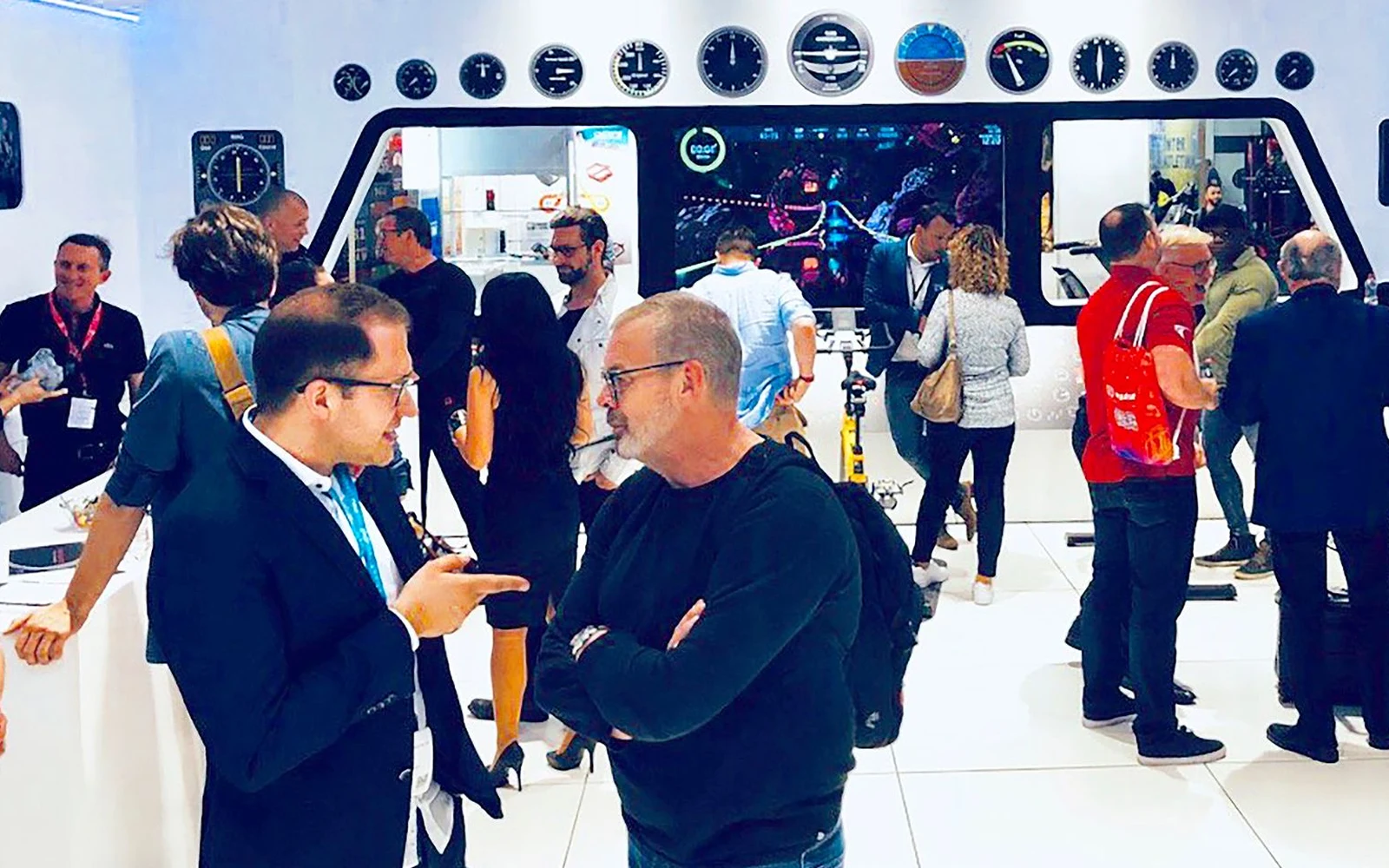
On Wednesday 14 October I'm cycling to work and I bump into one of the lads I work with. He's also on his way to work. We get off and stand chatting for ten minutes. It's tremendously enjoyable. When I get back on, I have ideas for three existing clients, about branding and marketing at the same time.
That's the contrast with the grind you sometimes experience when you try to solve everything with AI. Prompt, answer, another prompt. An encounter with a person is worth a thousand times more, and it isn't on any meter. In running a business with AI you quickly forget that, because the screen always gives an answer.
I've therefore set myself a goal. Ten minutes talking with people on the street. I didn't think of it myself. Søren Kierkegaard walked through Copenhagen every day in 1847 and talked with whoever he met. He called it a people bath. It still doesn't happen often enough, because I'm in the AI machine myself too, just like thousands of others. Yet this is the distribution that works. Running a business with AI only delivers something if the machine does the executive work and you collect the ideas from people. The judgement remains yours, as I wrote earlier about what no algorithm does for you.
In September the meter counted 5.76 billion tokens. Ten minutes beside the bike cost nothing and were worth more.
Sources
Anil R. Doshi and Oliver P. Hauser, "Generative AI enhances individual creativity but reduces the collective diversity of novel content", Science Advances, 2024.
"Merriam-Webster's 2025 word of the year is 'slop'", Associated Press, 15 December 2025.
Jim Rohn, American entrepreneur and speaker (1930-2009). The statement about the five people is widely attributed to him.
Søren Kierkegaard, Danish philosopher (1813-1855). About his daily walks through Copenhagen he wrote in his journals and in a letter to Henriette Lund from 1847.